Table of Contents
Introduction
Brazilian art is marked by a diversity of languages, influences, and historical contexts that reflect the country’s cultural complexity. Over time, different artistic movements have emerged as responses to social, political, and aesthetic transformations, proposing new ways of seeing, feeling, and representing Brazil. Some of these movements sought to break away from traditional standards, while others aimed to value elements of popular, regional, or urban culture, contributing to the construction of a plural artistic identity in constant transformation.
This article aims to present ten Brazilian artistic movements in an accessible and introductory way, especially designed for those beginning to take an interest in the subject. It highlights their main characteristics and contexts, seeking to spark curiosity and encourage a deeper exploration of this rich and dynamic universe of the arts in Brazil.
Armorial Movement
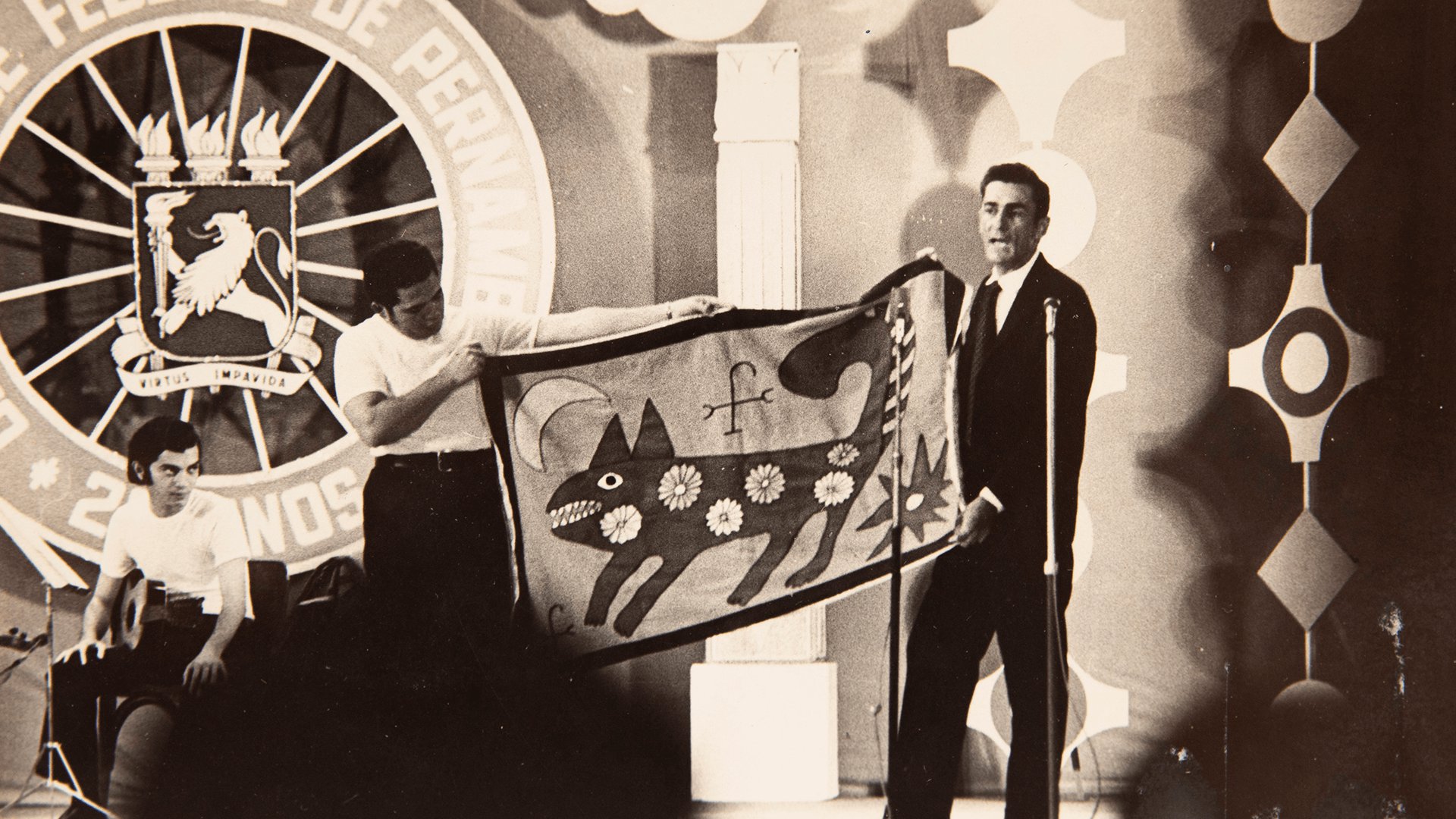
Ariano e Quinteto Armorial.
Apresentação ligada ao Quinteto Armorial, dos anos 1970 que materializava os princípios do movimento na música.
The Armorial Movement emerged in Brazil in the 1970s from writer Ariano Suassuna’s vision of formulating a refined artistic language that was deeply connected to the popular roots of the Northeast. Instead of treating cordel literature, the viola, woodcutting and the romance tradition as merely folkloric manifestations, the movement reworked them as the foundation of a sophisticated, symbolic and visually striking aesthetic. Its singular strength lies precisely in this operation: elevating popular cultural forms to a field of high artistic elaboration.
On an aesthetic level, the Armorial Movement is defined by its linear ornamentation, compositional symmetry, heraldic stylization and the recurring presence of signs from the imagery of chivalry, religion and the sertanejo. His visual vocabulary often incorporates arabesques, coats of arms, emblems, hybrid figures, fantastic animals and frontal compositions, as well as a graphic synthesis closely linked to popular woodcut traditions. Color, when it appears, tends towards restraint or rigorously articulated contrast, while the drawing favors clear contours, decorative rhythms and a markedly two-dimensional structure. Rather than pursuing naturalism, the armorial image operates through symbolic density, converging ornament, narrative and sign in the same visual field.
More than a style, Armorial also proposes a broader conception of culture: that Brazilian artistic production can achieve sophistication without detaching itself from its popular origins. For those who are beginning to approach art with greater attention, the movement offers an especially valuable key: understanding that tradition, identity and formal refinement are not opposing forces, but elements capable of coexisting and producing works of remarkable singularity in the global cultural panorama.
Brazilian modernism
Brazilian Modernism was a decisive moment of artistic renewal throughout the twentieth century, particularly from the 1920s onward. During this period, artists and intellectuals began to challenge traditional academic models and to seek a language more aligned with Brazil’s social, urban, and cultural transformations. Although it engaged with European avant-garde movements, it did not merely imitate them; instead, it reinterpreted these influences through local concerns, transforming Modernism into a broader project of redefining Brazilian culture.
On a visual level, Modernism is characterized by the simplification of forms, compositional freedom, the rejection of academic naturalism, and the valorization of more inventive formal solutions. Stronger colors, the geometrization of figures, the fragmentation of representation, and the construction of images with greater formal autonomy became increasingly common. At the same time, the movement turned its attention to themes related to everyday life, the national landscape, popular figures, and the processes of urban modernization, bringing to the center of art elements that had previously occupied a secondary role. In artists such as Tarsila do Amaral, Anita Malfatti, and Di Cavalcanti, these choices reveal the effort to construct a modern visual language without abandoning Brazilian references.
The importance of Brazilian Modernism lies in its ability to transform the criteria of artistic value and to open new paths for thinking about the country’s cultural identity. By engaging with European influence without relinquishing international dialogue, the movement contributed to the consolidation of a more autonomous modern art in Brazil. Its impact extends beyond painting and sculpture, reaching architecture, literature, design, and cultural criticism. For this reason, Modernism remains a central reference for understanding the formation of Brazilian art in the twentieth century.
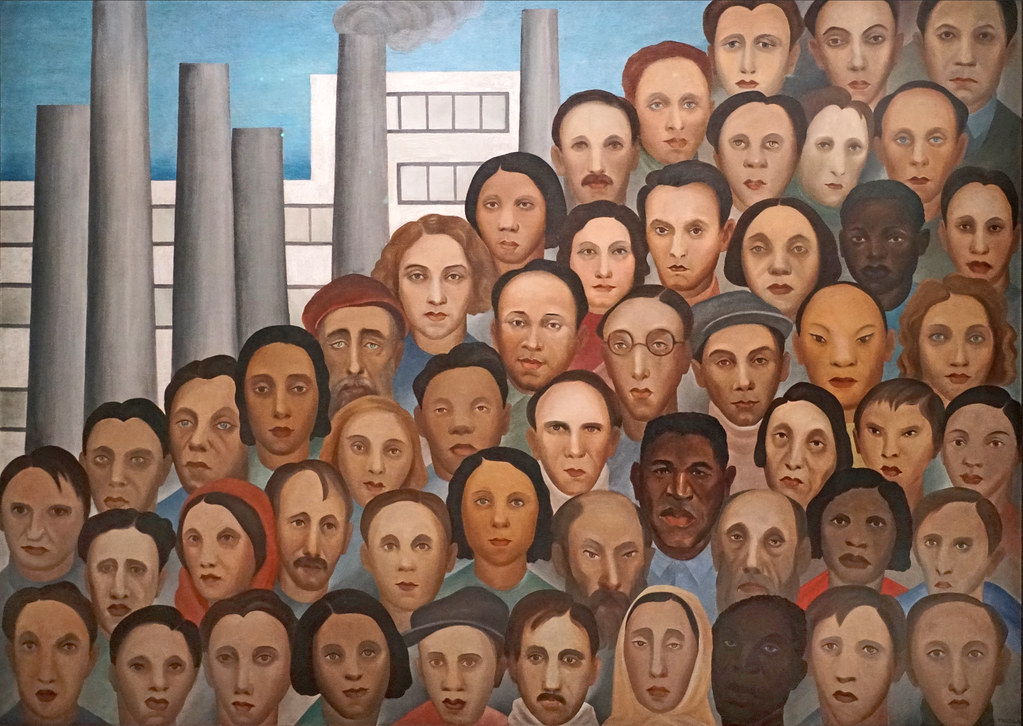
“Operários”
Pintada por Tarsila do Amaral em 1933.
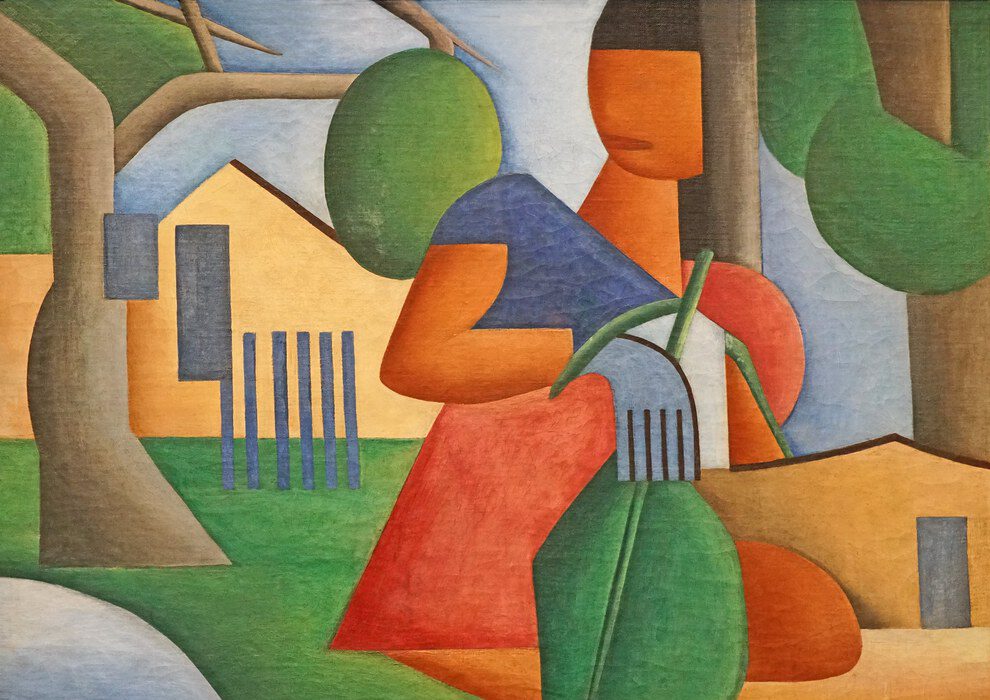
“A Caipirinha”
pintada pela artista modernista brasileira Tarsila do Amaral em 1923.
Baroque
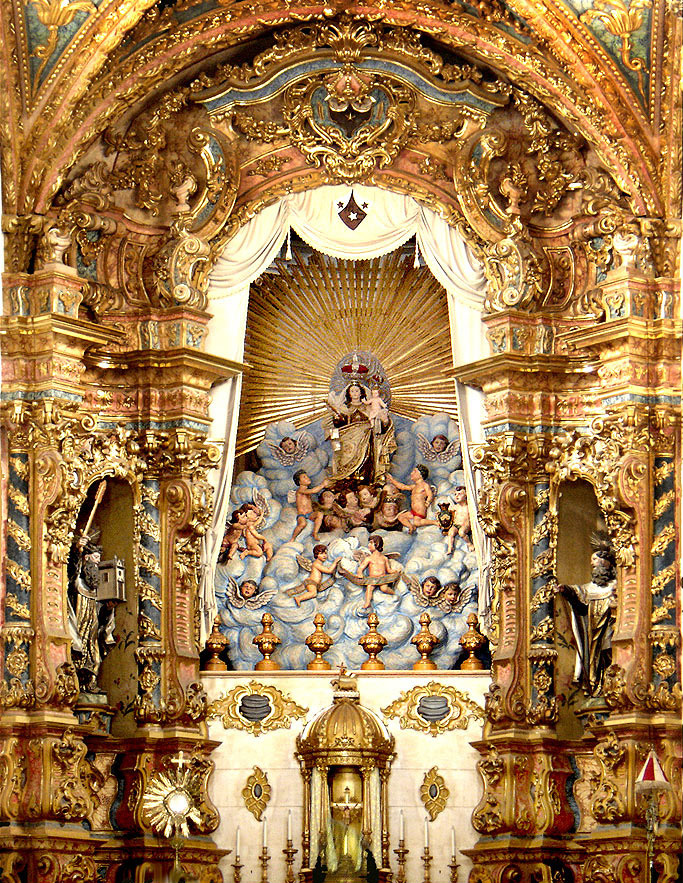
The Brazilian Baroque was one of the most important foundations in the history of art in the country, with its greatest development between the 17th and 18th centuries, during the colonial period. Its presence was especially strong in regions such as Bahia, Pernambuco and Minas Gerais, where artistic production was linked to the Catholic Church and the power structures of the time. In this context, the Baroque went beyond the stylistic dimension, also taking on a religious and social function within colonial life.
On a formal and material level, the Brazilian Baroque stands out for the wealth of resources used in the construction of images and spaces with a strong sensory impact. In architecture and religious interiors, carved wood, soapstone, clay, paint, gilding with gold leaf and polychromy were widely used, materials that allowed for high ornamental detail and intense expressive charge. Wood carving played a central role, especially on altars, altarpieces, pulpits and ceilings, where curves, reliefs, plant ornaments and religious motifs created densely worked surfaces. In sacred imagery, the use of polychrome wood favored the elaboration of dramatic figures, with marked gestures, expressive faces and clothing of great visual complexity. In painting, contrasts of light, scenographic depth and meticulous finishing stand out, while sculpture and architecture feature elaborate façades, interiors covered in ornamentation and formal solutions that produce movement, tension and monumentality.
The Brazilian Baroque occupies a central place in colonial art because it developed a visual language of strong symbolic density and great formal impact. Rather than reproducing European models, its presence in Brazil involved technical, material and iconographic adaptations that gave rise to its own configurations. For this reason, it remains a decisive reference for Brazil’s historical heritage and visual culture.
Tropicalia
Tropicália was one of the most important aesthetic changes in Brazilian culture in the 20th century. It emerged at the end of the 1960s and brought together music, visual arts, theater, cinema and poetry to present a new way of thinking about Brazil. Instead of defending a fixed or “pure” national identity, the movement took mixing and contradiction as creative forces, placing popular traditions, mass culture, avant-garde experimentation and international references side by side.
On an aesthetic level, Tropicália stands out for its combination of different languages, the accumulation of references and the use of dissonance, collage and excess as central resources. Its visual and sound vocabulary brings together Brazilian popular culture, psychedelia, concrete poetry and the mass media, creating works marked by contrast, theatricality and a strong symbolic charge. Instead of seeking unity or formal purity, the movement valued the tension between distinct elements, transforming exuberance into a critical resource to reveal the contradictions of Brazilian modernity.
More than just a historical movement, Tropicália presented a broader idea of culture: that artistic sophistication can also come from mixing, instability and daring. By breaking down the boundaries between the national and the foreign, the erudite and the popular, the refined and the everyday, the movement created an open and innovative model of cultural production. For those who look closely at Brazilian art, Tropicália offers an important key to reading: it shows that complexity, when handled well, can also be a form of aesthetic strength and cultural identity.
Brazilian Concretism
Brazilian Concretism was one of the most decisive formulations of modern art in the country, especially from the 1950s onwards, affirming a language based on formal objectivity, constructive rigor and the autonomy of visual elements. In dialogue with international trends of geometric abstraction, the movement sought to break with figurative representation and subjective expressiveness, defending the work as a structure organized according to precise relationships of form, color, space and rhythm. More than a stylistic choice, Concretism proposed a new understanding of art, based on clarity, order and the rational elaboration of composition.
On an aesthetic level, Concretism is characterized by the geometrization of forms, the reduction of visual vocabulary, compositional precision and the rejection of spontaneous gesture as the organizing principle of the work. Lines, planes, colors and volumes began to operate objectively, according to calculated structures and controlled visual relationships. The surface ceases to function as a field of illusion and assumes its material and constructive condition, valuing balance, seriality, repetition and formal synthesis. Instead of narrating, representing or expressing emotions in a direct way, the concrete work invests in the construction of a purified visuality, in which each element participates in a rigorously articulated system.
In its cultural dimension, Concretism can be understood as part of a broader project of aesthetic modernization, associated with the valorization of reason, industry, design and the visual organization of the contemporary world. Its importance lies in having consolidated, in Brazil, an artistic language committed to formal invention and constructive discipline, broadening the field of visual arts and also influencing poetry, design and visual communication. For this reason, the movement remains a central reference for understanding the relationship between art, form and modern thought in the Brazilian context.

Obra “Caranguejo” da coleção “Bichos” de Lygia Clark
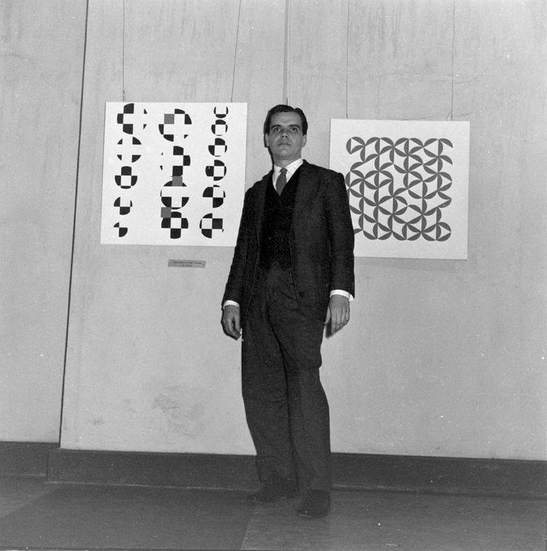
Willys de Castro em frente à pinturas na exposição do VI Salão de Arte Moderna de 1957
Neoconcretism
Brazilian Neoconcretism, developed in the late 1950s, marks a turning point in the visual arts by challenging the limits of the constructive rationalism that had shaped geometric abstraction in the country. In critical dialogue with Concretism, strongly influenced by European frameworks and grounded in logic, order, and calculation—the movement began to rethink the artwork as a sensitive structure, open to experience and instability. Within this context, art was no longer understood as an autonomous object, but rather as something that takes shape through its relationship with space, materiality, and the viewer’s body, shifting the focus from contemplation to lived experience.
On an aesthetic level, Neoconcretism stands out for its activation of real space and its move beyond strict two-dimensionality, proposing works that demand the viewer’s direct engagement. Reliefs, articulated structures, interactive objects, and immersive environments transform perception into a concrete experience, engaging sight, touch, and movement across time and space. Geometry remains present as a language, but it loses its rigid, normative role, becoming more flexible and expressive. Artists such as Lygia Clark, Hélio Oiticica, and Willys de Castro explored this shift by blurring the boundaries between painting, object, and environment, creating a visual language that emerges through the encounter between form and experience.
In its critical dimension, Neoconcretism can be understood as a response to more rigid ways of organizing modern art, proposing new relationships between artwork, audience, and context. Its political force lies not in direct protest imagery, but in the creation of situations that disrupt habitual ways of seeing and challenge established hierarchies between artist, artwork, and viewer. By combining formal innovation with sensorial engagement, the movement redefined the role of contemporary art in Brazil and expanded the critical possibilities of visual production across Latin America.
Anthropophagy
Brazilian Anthropophagy, formulated in the context of Modernism and consolidated with the Anthropophagic Manifesto of 1928, was one of the strongest ideas in Brazilian culture in the 20th century. Rather than advocating the simple absorption of external influences, the movement proposed that Brazil create its own cultural force by transforming what came from outside. Instead of copying European models or seeking a “pure” national identity, Anthropophagy presented Brazilian culture as capable of devouring, recreating and giving new meaning to diverse references.
On an aesthetic level, Antropofagia stands out for its mixture of repertoires, the combination of different times and references and the use of irony, parody and experimentation as central elements. The movement brings together indigenous culture, orality, humor, criticism and modern forms of artistic invention, creating a language marked by shock, displacement and reinvention. Instead of seeking unity or fidelity to imported models, the anthropophagic proposal values the transformation of what is appropriated, making art a space for recomposition and creative tension.
In its political dimension, Anthropophagy can be understood as a direct critique of the cultural hierarchies inherited from colonialism. Its strength lay in inverting the logic of influence: what came from outside was no longer seen as a superior model and became the subject of creation. By defending this active gesture of appropriation and transformation, the movement proposed a form of cultural autonomy based on the refusal of passivity. For this reason, Antropofagia remains a central reference for thinking about art, literature and debates about identity and decolonization in Brazil.
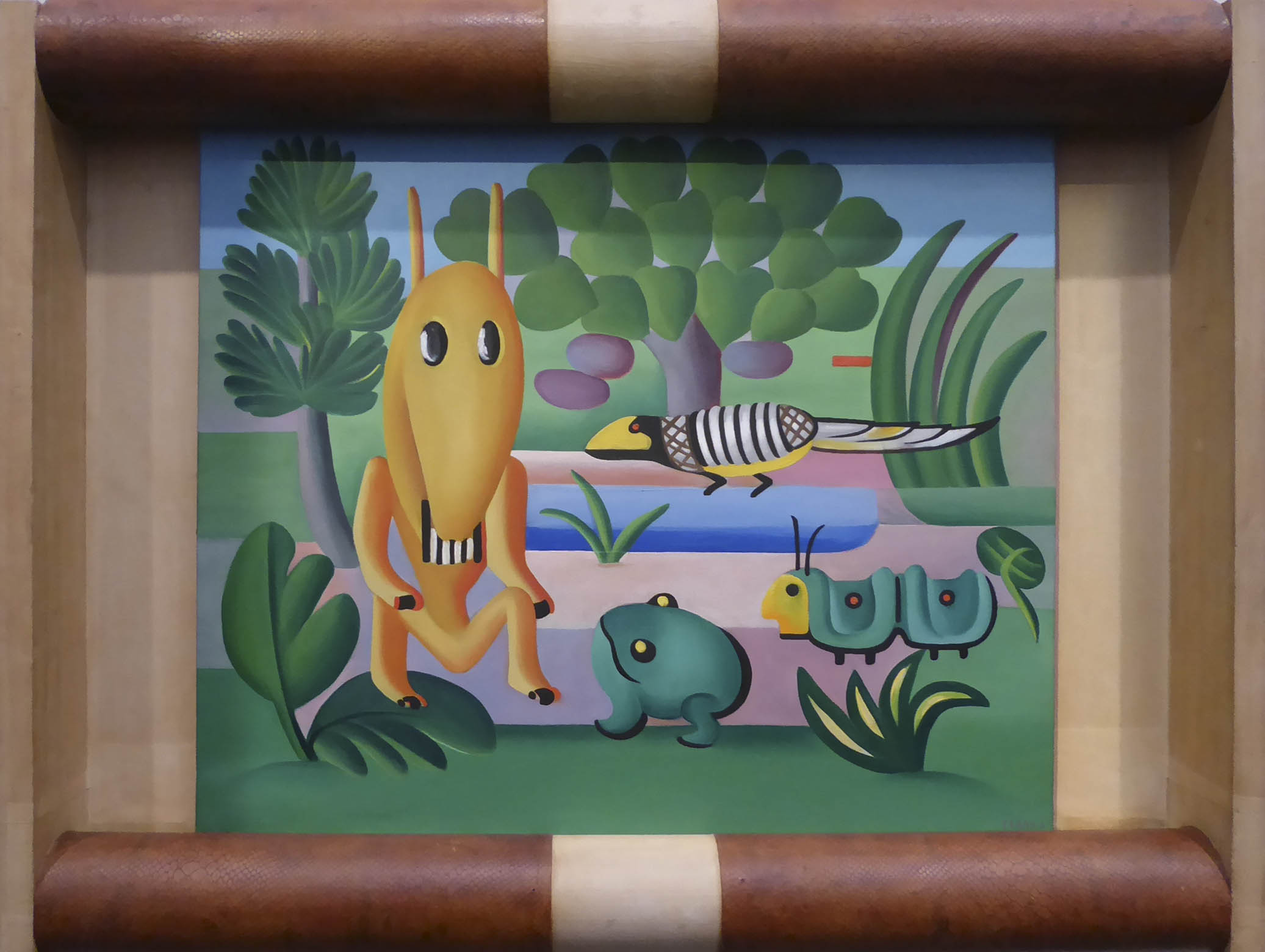
A Cuca, 1924 – Óleo sobre tela Tarsila do Amaral
Cyberagreste
Brazilian cyberaggression can be understood as an emerging aesthetic that brings together repertoires from the Northeast, the sertão and popular cultures with imaginaries linked to science fiction, cyberpunk and technological visualities. More than a formally consolidated movement, it is a language in circulation in the visual arts, illustration, fashion and speculative fiction, marked by the invention of futures based on regional references.
On an aesthetic level, cyberagreste is characterized by the fusion of regional signs and futuristic elements, producing images of strong contrast and hybridity. Clothing that evokes the cangaço, arid landscapes, popular graphics, electronic junk, prostheses, artificial light and digital interfaces all coexist in the same composition. Instead of seeking documentary fidelity, this aesthetic operates through mixing, displacement and symbolic reinvention, transforming elements from the Northeast into material for imagining other possible futures.
In its critical dimension, cyberagreste tensions traditional ways of representing the Northeast, proposing that the future can also be thought of from territories historically treated as peripheral. By bringing together technology, popular culture and speculative imagination, this formulation broadens the field of representation and shifts the center of visual narratives about modernity in Brazil. At the same time, its debate also involves the risk of repeating stereotypes, which makes this aesthetic an active field of symbolic dispute.
Brazilian Expressionism
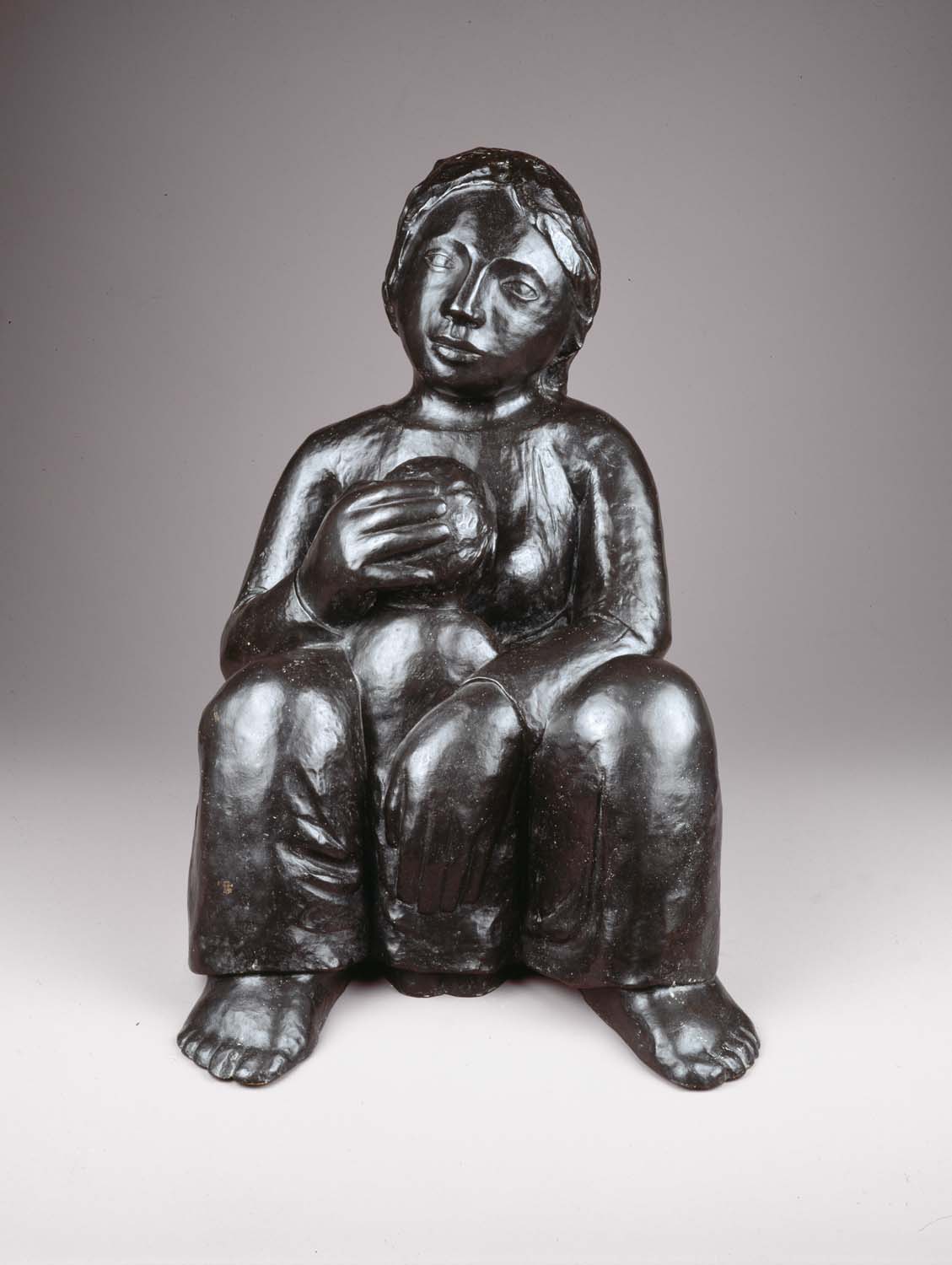
“Maternidade” Lasar Segall
Brazilian expressionism developed in the first decades of the 20th century, in dialogue with the modernist renewal and the circulation of avant-garde languages from Europe. In Brazil, it was not consolidated as a homogeneous and closed movement, but as a visual orientation present in artists who sought to break with academic naturalism and amplify the emotional power of the image. In this context, names like Anita Malfatti and Lasar Segall were decisive in introducing a painting marked by expressive deformation, psychological intensity and formal freedom, helping to shift the axis of Brazilian art towards modernity.
On a visual level, Brazilian expressionism is characterized by the distortion of forms, the dramatic use of color, the intensification of line and the construction of atmospheres with a strong emotional charge. Tense faces, elongated figures, unstable compositions and chromatic contrasts appear as resources to make visible states of anguish, loneliness, conflict or melancholy. Instead of seeking fidelity to reality, this language values subjectivity, turning painting into a field of affective condensation and sensitive tension. In the Brazilian context, these operations are linked both to urban and social experiences and to more existential readings of the human figure.
Historically, expressionism was of great importance in Brazil because it contributed to the break with academic standards and opened up space for a freer, more subjective and experimental art. Its presence was decisive in the formation of modern Brazilian art, especially in legitimizing a visuality that was less concerned with imitation and more focused on the intensity of experience. Por isso, o expressionismo brasileiro ocupa um lugar relevante na história da arte do país, não como escola estável, mas como força de transformação estética que ajudou a expandir os limites da representação moderna.
Graffiti
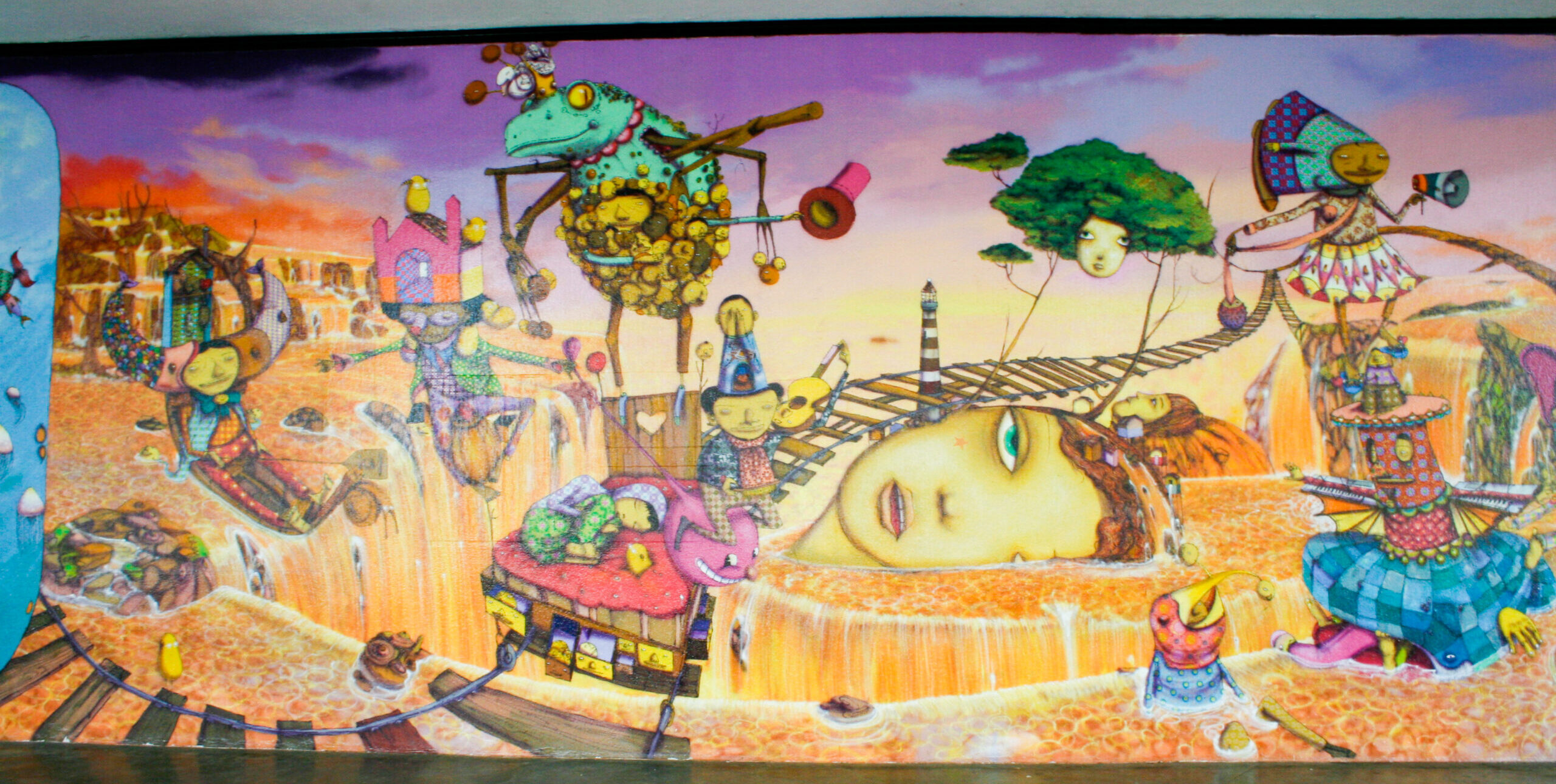
Grafite na entrada do Mam, Os Gêmeos
Parque Ibirapuera, Avenida Pedro Álvares Cabral, s/n. Foto por André Deak para o Arte Fora do Museu (http://www.arteforadomuseu.com.br)
In Brazil, graffiti and urban art constitute a visual language deeply linked to the experience of the city, street culture and the dispute for visibility in the public space. Although they have been in dialogue with the international circulation of graffiti since the 1970s, these practices have acquired their own configurations in Brazil, linked to hip-hop culture, urban inequality, the symbolic occupation of the metropolis and the invention of local repertoires. Instead of being reduced to decorative intervention, they assert themselves as forms of aesthetic and social inscription on the urban landscape.
On a visual level, graffiti and urban art in Brazil stand out for the strength of their strokes, their larger scale, their chromatic intensity and the variety of their procedures. Stylized letters, characters, narrative figures, graphic patterns and monumental compositions began to operate in dialogue with walls, façades, passageways and other surfaces in the city, incorporating the texture and materiality of the urban environment. At the same time, the Brazilian scene has consolidated its own vocabulary, visible both in productions linked to contemporary muralism and in remarkable trajectories such as that of Os Gêmeos, whose work combines Brazilian culture, popular imagery and hip-hop references in a widely recognizable visuality.
In their historical and critical dimension, these practices are relevant because they move art outside the traditional institutional circuits and make visible issues related to territory, gender, race, the environment and urban memory. In Brazil, artists such as Panmela Castro and Mundano show how graffiti can also operate as a tool for activism and public intervention, broadening the field of urban art beyond the image and bringing it closer to urgent social debates. This is why graffiti and urban art occupy a central place in Brazilian visual culture today: not just as an aesthetic language, but as an active form of presence, criticism and invention in the urban space.
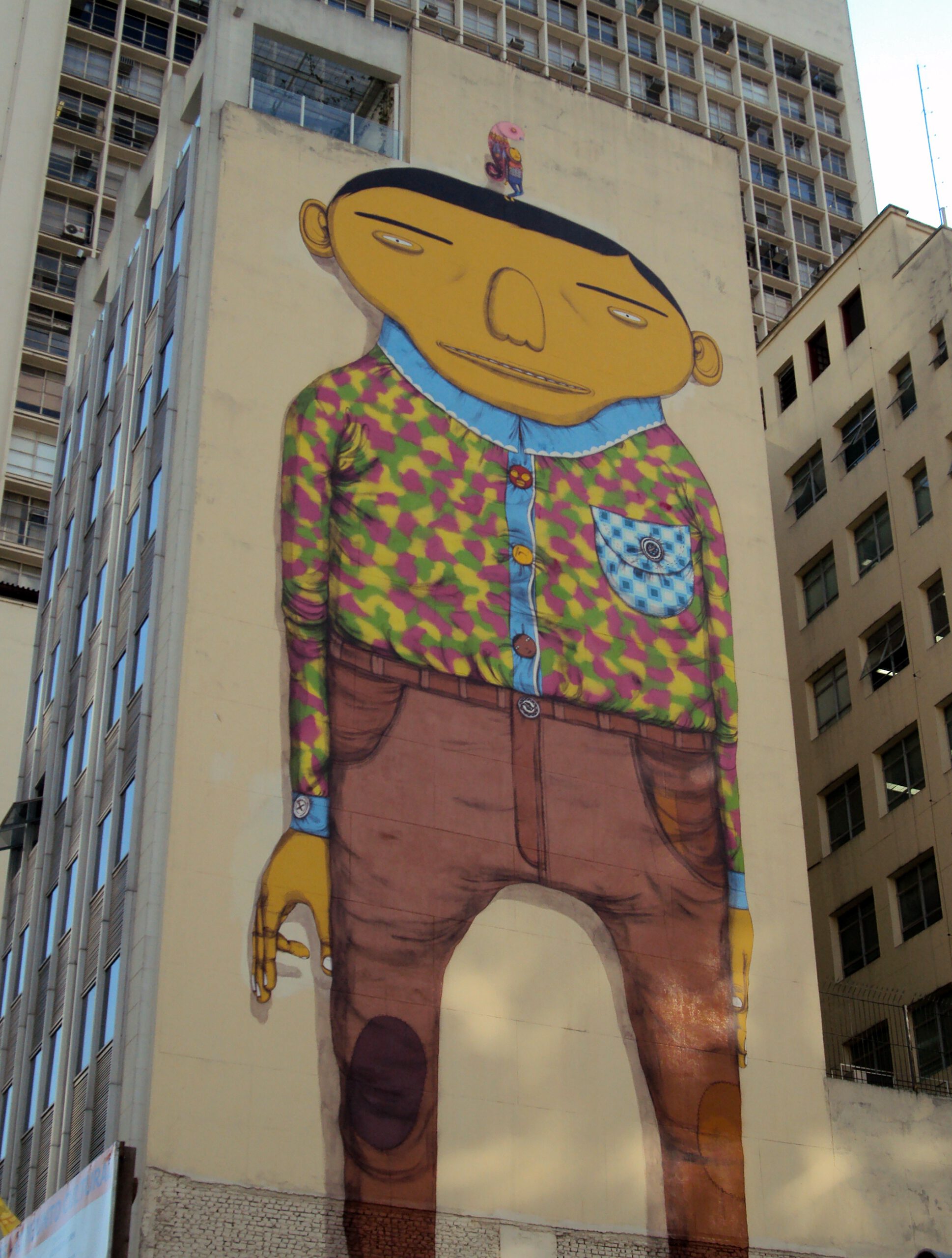
Os Gemeos
Taken together, these movements highlight the strength, diversity, and sophistication of Brazilian art over time. Understanding them makes it possible to grasp how different artists, languages, and historical contexts have contributed to the formation of singular ways of creating and interpreting Brazil. Even as an introductory overview, this trajectory already reveals a broad, dynamic, and plural artistic field, capable of fostering a more attentive and engaged perspective on the country’s cultural production.





Leave A Comment